
 Katharina Frohne
A Long-Term Future for NFDI: Transition to Permanent Structures Can Begin
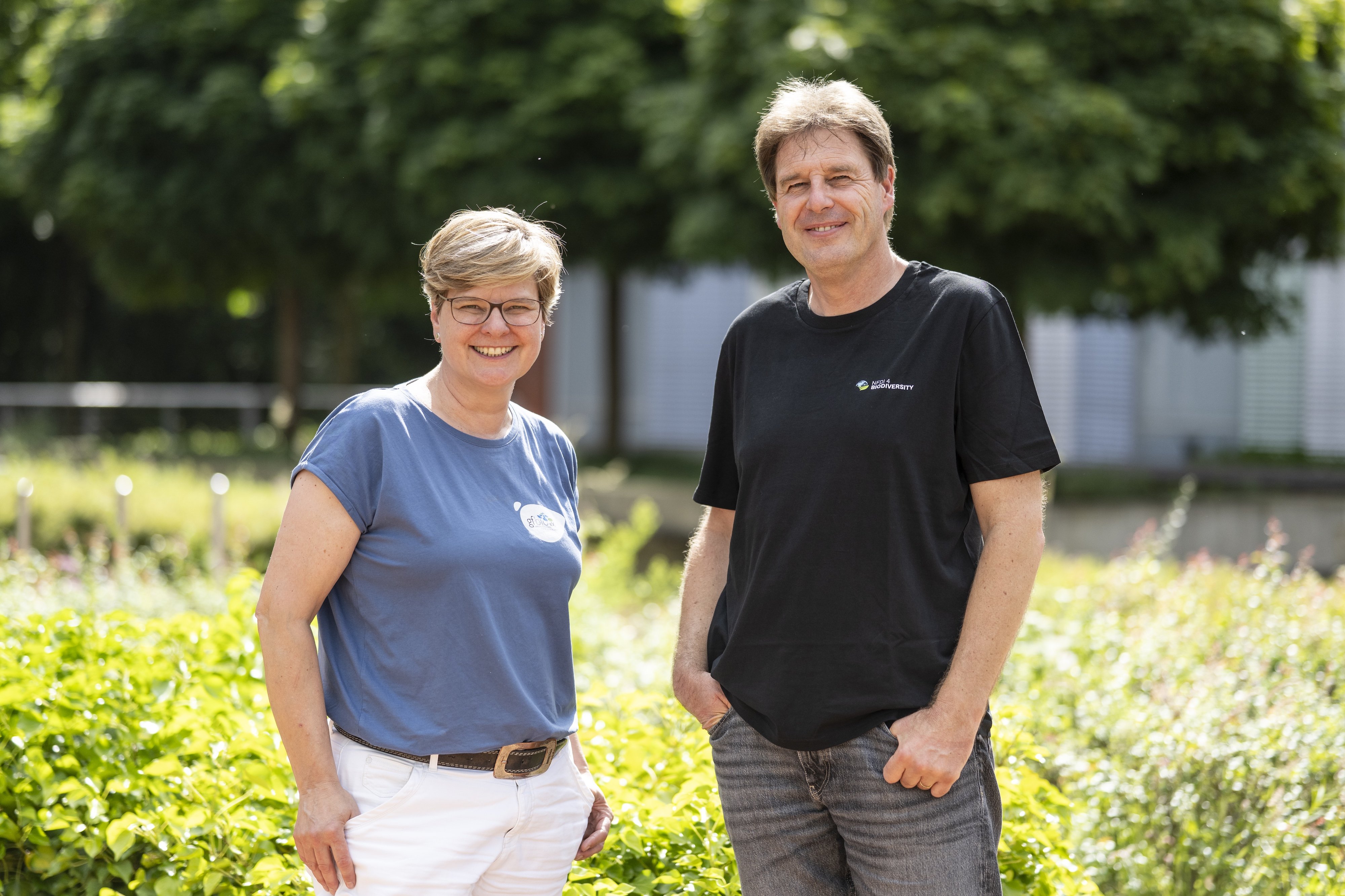
The new Federal-State Agreement marks the beginning of NFDI’s transition from its development phase to permanent structures. NFDI4Biodiversity will play an active part in shaping this transition, contributing its established services, the perspectives of its community and its existing partnerships.
On 10 July 2026, the Joint Science Conference (GWK) adopted a new Federal-State Agreement on Germany’s National Research Data Infrastructure (NFDI). The agreement gives NFDI a long-term future: from 1 January 2029 to 31 December 2038, the German federal and state governments will provide up to approximately €98.7 million per year to place NFDI on a permanent footing. The federal government will contribute 90 per cent of the funding, with the states providing the remaining 10 per cent.
The decision is excellent news for the scientific community. Since the first consortia began their work in 2020, a collection of initiatives firmly rooted in their respective disciplines has grown into a nationwide network dedicated to the responsible management of research data. It makes data holdings accessible, establishes standards, tools and advisory services, and connects disciplinary communities, data centres and infrastructure providers. The new Federal-State Agreement is intended to safeguard this extensive expertise, the relationships that have been built and the services already widely used in day-to-day research, and to transfer them into a permanent structure.
From a Development Initiative to a Permanent Infrastructure
The new agreement therefore amounts to more than continued funding—it initiates a fundamental restructuring. To bring together the structures developed by the 26 disciplinary communities in a meaningful way, the NFDI Association will in future be organised into up to eight disciplinary divisions and an operations network. The divisions will coordinate and take responsibility for discipline-specific activities, while the operations network will provide a central yet federated platform for services. The agreement also provides for an innovation programme administered by the German Research Foundation (DFG), designed to explore and test new developments in research data management.
The overall direction has thus been set, but the details of the consolidation process must be worked out over the coming months. A central role will be played by a Transition Team appointed by the NFDI Association’s Board of Trustees. Between December 2026 and December 2028, its tasks will include establishing the up to eight disciplinary divisions and the operations network, developing a timetable and procedure for transferring the consortia into the new structure, preparing models for cooperation, and systematically cataloguing and consolidating existing services. The team will comprise up to six experts from academia and research management, supported by an administrative unit, and will be able to draw on external expertise where required.
Key decisions will therefore need to be made in 2027—including how the disciplinary divisions will be defined, which consortia will join forces within them, how communities will remain reliably involved, and which transparent criteria will determine whether established services are incorporated into the future structure.
The funding model also reflects a gradual transition. Funding for the existing consortia will continue on a declining basis between 2029 and 2032. Once the disciplinary divisions have been fully established, 80 per cent of the available funding—excluding evaluation costs—will go to the NFDI Association, with 20 per cent allocated to the DFG innovation programme. The transition will therefore not be an abrupt one. Nevertheless, timely and robust decisions will be needed about which disciplinary responsibilities, expertise, services and partnerships must be retained for the long term.
How NFDI4Biodiversity Is Helping to Shape the Transition
The five-year work programme for NFDI4Biodiversity’s second funding phase provides the consortium with a strategic framework through 2030. Its work is currently funded until the end of 2028; for 2029 and 2030, the consortium expects to receive transitional funding, although the amount has yet to be determined. Sustainable arrangements must therefore be in place by 2031 for the responsibilities, services and partnerships that are to continue over the long term.
“The new Federal-State Agreement gives NFDI the long-term perspective it urgently needs. The key now is to manage the transition in a way that preserves the wide range of services we provide to the biodiversity data community and allows us to integrate them productively with those of closely related consortia.” [Frank Oliver Glöckner, Spokesperson for NFDI4Biodiversity]
The NFDI4Biodiversity network, which now comprises around 60 institutions from research, museums and collections, natural history societies, citizen science initiatives and public authorities, will play an active role in shaping this process. It is well placed to do so: in 2025, the DFG’s international review panel rated the consortium’s work as “highly relevant to the scientific community” and commended its “outstanding momentum” in mobilising and providing biodiversity data. Its organisational structure, community engagement and the maturity of its results were also recognised as exemplary.
“The new Federal-State Agreement gives NFDI the long-term perspective it urgently needs,” says Frank Oliver Glöckner, Spokesperson for NFDI4Biodiversity. “The key now is to manage the transition in a way that preserves the wide range of services we provide to the biodiversity data community and allows us to integrate them productively with those of closely related consortia. At the same time, we must remain open to emerging scientific requirements and new communities.”
Biodata Interest Group: “Identifying Needs Early, Testing Interfaces in Practice and Helping to Shape the Disciplinary Divisions”
The new structure cannot be designed in isolation; it will require close cooperation among the consortia. The Biodata Interest Group will play an important role in this process. DataPLANT, NFDI4Biodiversity, NFDI4Microbiota, FAIRagro, NFDI4Objects and NFDI4BIOIMAGE pool their expertise in research data management for the biological sciences within the group. Launched by three consortia in 2024 and expanded to six partners in 2026, the collaboration covers standards for biological data and workflows, interoperable services and shared infrastructures, as well as coordinated training and support.
“The Biodata Interest Group is already showing us what can be achieved when related communities bring their different strengths together,” says Barbara Ebert, Co-Spokesperson for NFDI4Biodiversity. “This established partnership will be particularly valuable during the transition phase: together, we can identify shared needs early, test interfaces in practice and contribute constructively to the formation of the disciplinary divisions. Our aim is to create a structure that harnesses synergies without erasing the diversity of biological data and research cultures, enabling researchers to quickly find support suited to their discipline and methods.”
Further Information


Please enter your Mastodon instance

News

From Volunteer Fish Observations to an Internation...
A Long-Term Future for NFDI: Transition to Permane...

BIIGLE4Beginners: A New Online Tutorial for Image ...
Open Data, Shared Responsibility: New Guidance Sho...

Historical Biodiversity Dataset Receives FAIRest D...

CloWM Joins the NFDI4Biodiversity Service Catalog ...
From Three to Six: Biodata Interest Group Publishe...

"Creating knowledge without data is impossible"

NFDI4Biodiversity Flexfunds: Three Projects Show H...