

 Marie Meemken
New interface connects official species observation data with biodiversity portals
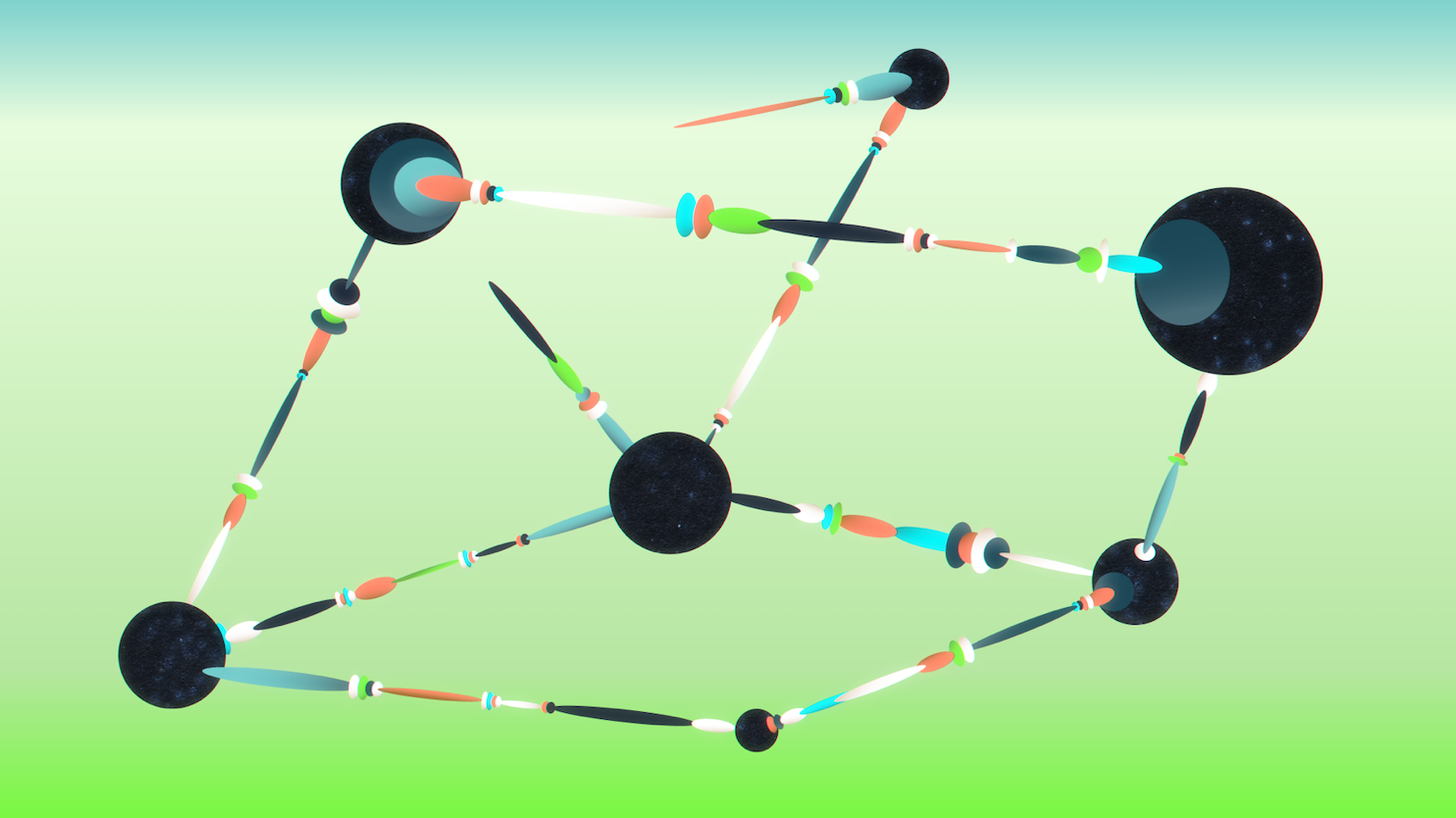
Observation data from the MultiBaseCS specialist system can now be exchanged in the Darwin Core standard with portals such as the international data network GBIF and the Living Atlas of Nature Germany (LAND) — in both directions.
A central objective of the NFDI4Biodiversity consortium is to make diverse research and monitoring data usable for science, public administration, and practice — consistently following the FAIR principles. This also includes activating data holdings that arise within governmental and administrative processes. A key achievement of the project is therefore the development of a new interface that makes official species observation data from MultiBaseCS available to national and international biodiversity portals. In addition, existing datasets from the Global Biodiversity Information Facility (GBIF) are to be made accessible for use by public authorities.
MultiBaseCS is a well-established database system that has been used in governmental nature conservation for many years. It supports the standardized, data-protection-compliant collection and management of plant and animal observation data via desktop, web, and mobile applications. The system is currently used by seven German federal states, the Federal Agency for Nature Conservation (BfN), as well as numerous planning offices, conservation organizations, and volunteer recorders. Ongoing development takes place collaboratively within the MultiBaseCS federal states working group, a KoopUIS project of the federal states and the BfN.
Within the NFDI4Biodiversity consortium, several state authorities actively working with MultiBaseCS are involved, including the State Office for Environmental Protection of Saxony-Anhalt, the Berlin Senate Department for Mobility, Transport, Climate Protection and the Environment, the Hessian Agency for Nature Conservation, Environment and Geology, and the State Office for Environment, Agriculture and Geology of Saxony. In close collaboration with these partner institutions, as well as experts from the Berlin Center for Biodiversity Informatics, the University of Jena, and GFBio e.V., a Darwin Core interface for MultiBaseCS was specified in 2025.
Other public authorities could benefit
This interface enables the import and export of occurrence data using the internationally established Darwin Core standard, thereby providing the technical foundation for bidirectional data exchange with portals such as GBIF and the Living Atlas of Nature Germany (LAND). Once integrated, the interface becomes automatically available to all MultiBaseCS users and serves as a model for other authorities and stakeholders.
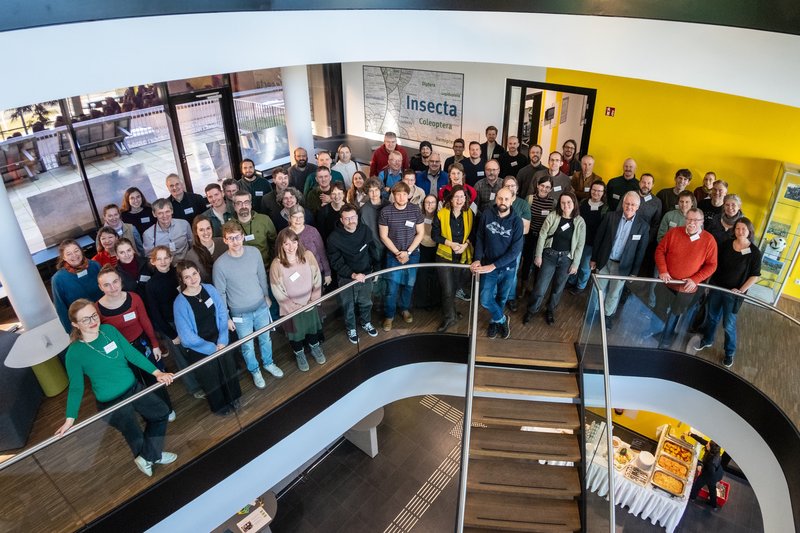
The interface was publicly presented for the first time at the LAND/sMon Community Workshop, held on 19–20 January 2026 at iDiv in Leipzig. The presentation was delivered by 34u, the software company behind MultiBaseCS. The next step is to bring the interface into active use: through targeted stakeholder engagement, concrete, quality-assured datasets are now to be mobilized for bidirectional exchange.
One aspect that still needs to be clarified on a case-by-case basis is how and where the governmental Darwin Core Archives should best be hosted for delivery to GBIF. For most MultiBaseCS users, submission via the GFBio Submission Service is recommended, although self-hosting is also possible.
Documentation
Documentation on establishing the interface can be found here:
https://hilfe.multibasecs.de/server/export_darwin_core.html
Contact
If you have any questions about the content of this article, please contact our Helpdesk or send an email to helpdesk@nfdi4biodiversity.org.


News
New interface connects official species observatio...

Season's Greetings 2025
Recap: Joint Plenary of NFDI4Biodiversity & NFDI4E...
NFDI4Biodiversity enters second phase in October: ...

Wildlife Mortality Registry: An Underestimated Dat...

How Archival Data Can Inspire New Research
Open, but legally sound: What a new legal review r...
Streamlined Support: Ten NFDI Helpdesks Strengthen...
DFG Funding Recommendation and Coalition Agreement...